Early exposure of economics students to symbolic computation in Python
2025-12-12
… is a mixed bag.
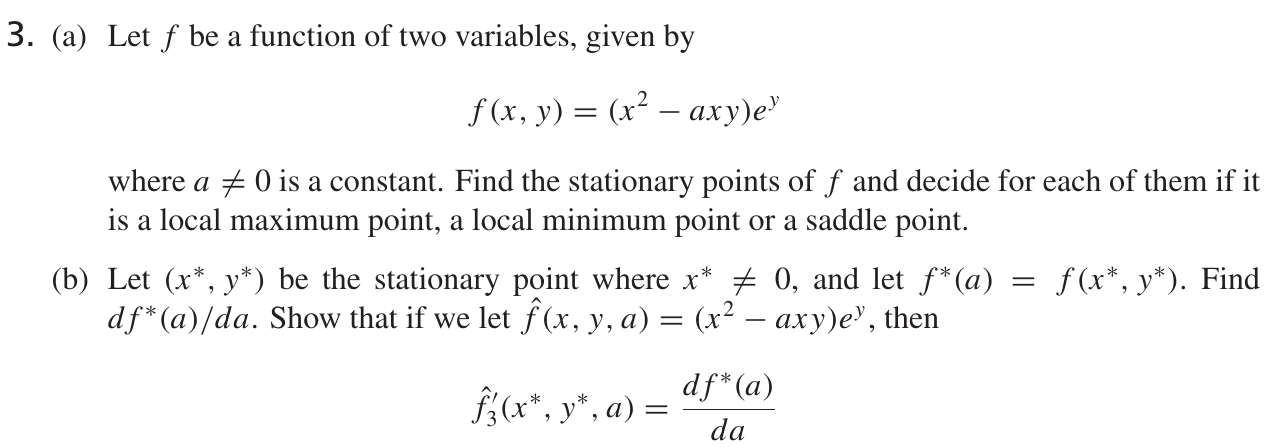
Example: Finding extrema and doing some comparative statics
From Essential Mathematics for Economic Analysis:
Why?
- Every student should be able to open their textbook (or references) and then work on examples and answer the exercises using SymPy.
- Even better if they could write a full solution with text, explanations, and mathematical reasoning.
- Communication with mathematics and seeing it in action help students.
- But retention is not very high even within the same term.
- Exam scores have a lot of spread.
Where?
Pedagogical materials using symbolic computation in Python
- Kuroki (2021): Undergraduate microeconomic theory
- Stippell, Akimov, and Prezhdo (2023): Undergraduate quantum chemistry
Where?
Remarkably sparse literature on the effectiveness of integrating symbolic computation into post-secondary courses
- Marshall et al (2012): how to assess?
- Milenković et al (2020): effect of CAS on exam tasks related to double integrals
- Matzakos and Moundridou (2025): LLM + CAS
How?
Context:
- Twenty-three 1st year economics majors
- Optimization: 3 unit lecture, 1 unit lab, integrated version
- Meet only one hour once a week for 12 times, but 3 of those times are exams
Minimal setup: No Python background, cloud computing via SymPy Live Shell and Google Colab
Survey questions plus exam scores
Findings
First exam was write code by hand for first half and then answer the same exercise with a computer.
- Miserable results
- Changed for the remaining 2 exams
After that, full PC use with ability to consult manual.
A report with a full solution and explanation could be required.
Some students failed the course.
Exam results
| Components | Median | IQR |
|---|---|---|
| Long Exam 1 (by hand) | 35% | 24% |
| Long Exam 1 (with PC) | 40% | 20% |
| Long Exam 1 | 35% | 19% |
| Long Exam 2 | 50% | 24% |
| Long Exam 3 | 80% | 31% |
| Final Grades | 64% | 18% |
Student evaluation
Based on 3 evaluations during the first 4 to 5 meetings:
- Roughly 50%-60% were distracted by other open tabs.
- Roughly 80%-90% of students can see tangible evidence that the lectures are connected to the lab.
- Roughly 60% of students forgotten commands from past labs.
- Not everyone can finish all exercises
Advantages
- Chance to see theory in a different form
- Teach programming (in a narrow sense) indirectly
- Be comfortable with the “command line”
- Create dynamic documents and weave Python calculations into documents – Learn LaTeX, HTML, Markdown indirectly
- “Dumping everything on a computer” mentality can somehow be corrected.
Mix of good and bad
- AI is literally built in to Google Colab
- Can be frustrating to move around the lab troubleshooting every little thing
- 1 hour goes by so fast
- Unclear whether skills get transferred to major courses
- Not very natural to learn syntax and write code: Why? It requires actual thinking.
Reaching out
Questions, proposals, collaboration?
Email me at andrew.pua@dlsu.edu.ph or approach me.
Drop in https://ecoxlabmath.neocities.org if you want to know more.